
 Facebook
 X
X
 Pinterest
 Copy Link

By Mike DelRose Jr. | May 19th, 2026
Quick Answer
In a highly desirable Natick location near downtown, a seller launched showings at a Saturday open house and accepted an offer before the scheduled Sunday open house ever took place. By working with two strong early buyers instead of waiting for broader competition, the home sold for $175,000 over asking. This is a clear example of how location, timing, and the Pareto Principle can outperform a strategy built around maximizing the number of offers.
Property & Location Overview
This home sits in the Walnut Hill neighborhood of Natick, about a mile from downtown, which continues to attract buyers looking for both convenience and a true neighborhood setting.
When the sellers originally purchased the home, it had just been built new from the foundation up. That newer construction quality still carried through, giving buyers confidence in the layout, systems, and overall condition.
The property offered four bedrooms, two and a half baths, a private backyard, and an attached garage. It was listed at $1,175,000 and ultimately sold for $1,350,000.
Client Situation
The seller had already purchased their next home and wanted a clean, efficient transition. They were not interested in stretching the process longer than necessary if a strong result was already achievable.
They also understood their approach was not the most common one. Many sellers would have moved forward with a formal offer deadline, giving every interested buyer a chance to compete. That path can increase competition, but it also introduces more moving parts and a longer timeline.
Instead, the seller was open to acting early if the right conditions presented themselves, knowing there was some risk in not inviting every potential buyer into the process.
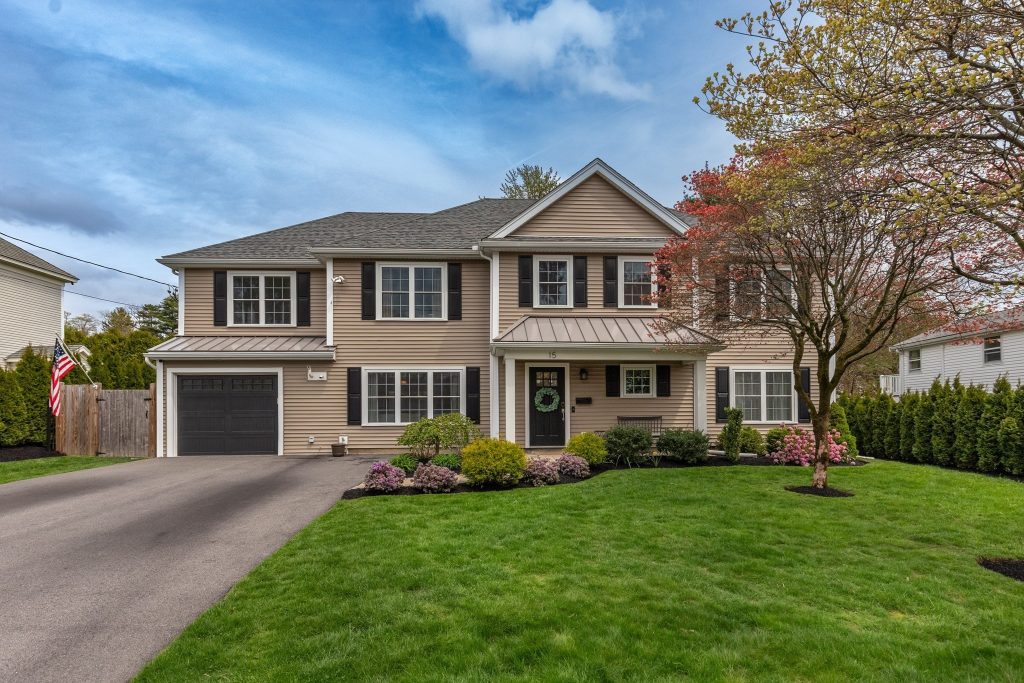
Natick Colonial
Market Conditions
At this price point in Natick, well prepared homes were seeing immediate attention. Inventory remained tight, and buyers were ready to move quickly when the right opportunity came up.
The Saturday open house generated strong traffic, and serious buyers emerged right away. By that point, it was clear the home was going to attract competitive interest without needing extended exposure.
The Key Challenge
Two strong offers came in immediately after the Saturday open house. Both buyers were motivated and trying to secure the home before additional competition built.
At the same time, several other buyers were preparing to act, many of whom were planning to attend the Sunday open house. Choosing to move forward early meant those buyers would never have the opportunity to submit offers.
This created a real decision point between maximizing exposure and maximizing execution.
Strategy & Execution
We leaned into the strength of the early activity while still protecting the seller’s position.
Rather than setting a deadline and expanding the pool, we focused on the two strongest buyers already at the table. We created a direct competitive dynamic and guided both sides into a final round.
This is where the Pareto Principle, often referred to as the 80/20 rule, comes into play. In many cases, a small percentage of participants drive the majority of outcomes. In this situation, the strongest buyers had already identified themselves early in the process.
The strategy centered on:
- Keeping the timeline tight to preserve urgency
- Positioning each offer clearly against the other
- Driving both buyers toward a clean and decisive final round
This allowed us to capture competition without needing to extend the process.
Obstacles During the Process
The primary concern was whether waiting could have produced a higher number. By accepting an offer before the Sunday open house, the seller was intentionally limiting the pool of buyers.
That decision carries uncertainty. More exposure can sometimes lead to stronger results, especially in a competitive market.
The key was recognizing whether the best opportunities were already in front of us.
Outcome
The outcome confirmed that the early buyers were also the most competitive.
After the final round, the winning offer came in at $1,350,000, which was $175,000 over asking. The remaining interested buyers never had the opportunity to compete, and none ultimately surfaced with stronger terms.
What Made This Different
What stands out here is the combination of location, timing, and decision making.
The home’s proximity to downtown Natick and its newer construction appeal created immediate demand. That demand showed up quickly and clearly, which made it possible to act with confidence.
Instead of following the standard approach of collecting as many offers as possible, the strategy focused on identifying where the real leverage already existed.
Lessons & Insights
There are a few key takeaways from this situation.
Location drives early signals. When a property is positioned well, serious buyers tend to act quickly and reveal themselves early.
The Pareto Principle applies directly to real estate. A small percentage of buyers often generate the strongest outcomes, and recognizing that can shape a more efficient strategy.
More offers can help, but they are not always required. The ability to identify and act on the right opportunities is often more valuable than simply increasing volume.
Understanding when to wait and when to move forward is what ultimately defines the result.
Click Here For A Real Estate Search With Your Guide, Mike DelRose Jr.
Have a question about this situation, general strategy, or something personal to you? Call Me at 617.515.7715
