
 Facebook
 X
X
 Pinterest
 Copy Link

By Mike DelRose Jr. | April 20th, 2026
The short version
A buyer had a real chance to control a deal before it hit the market. They passed. Eight offers later, they were back at the table, this time competing with everyone else, without any of the leverage they had the first time around.
Where This Started
My sellers had just closed on a new single family home. They were carrying two properties and the weight of that was real. Not just financially. Emotionally. They were stretched, they were tired, and all they wanted was to stop managing the uncertainty. They owned a condominium in Waltham, right on the Belmont line near Waverley Square, and when we sat down to talk about the listing process, they asked me something a lot of sellers think but do not always say out loud.
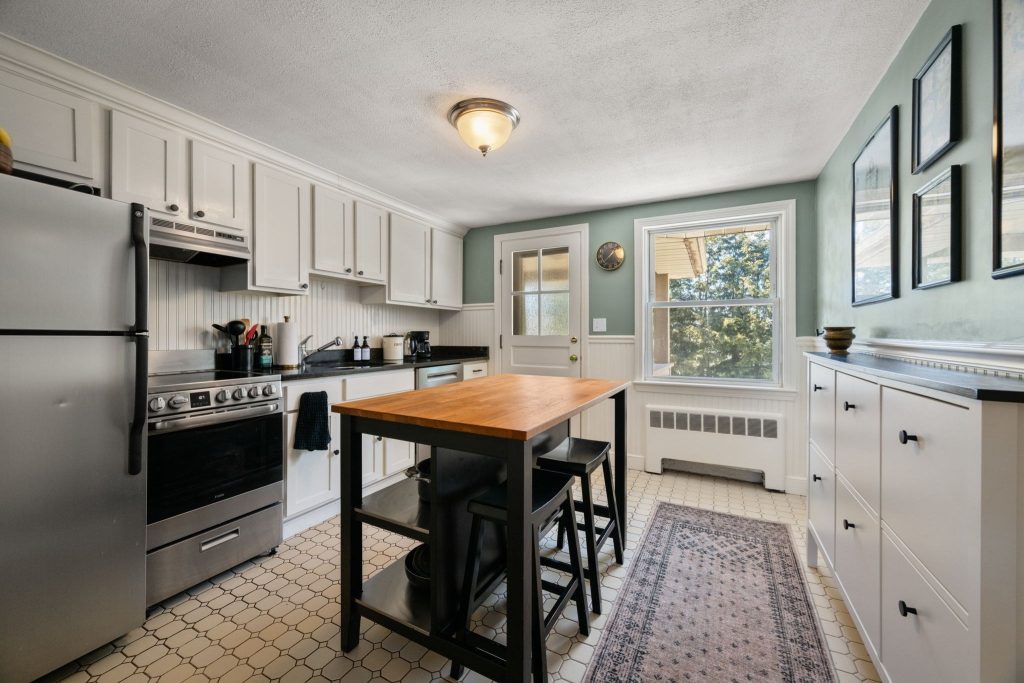
Kitchen of a Waltham Listing
“Can we just sell it now? Without all of it?”
I understood exactly what they meant. The preparation. The open houses. The strangers walking through on a Sunday. The waiting. They were not trying to leave money on the table. They were trying to stop bleeding stress. They had already been through one transaction. They wanted this one to be over. And honestly, that feeling makes complete sense. An accepted offer feels like solid ground. It feels like you can exhale. It feels like the finish line is actually visible for the first time in months.
But here is what I told them, and what I tell every seller who finds themselves in that same place: peace of mind built on a weak offer is not peace of mind. It is just a different kind of waiting, one where you spend the next several weeks wondering what the market would have given you if you had trusted it.
I also told them something that matters more now than it ever has. What we are watching play out between platforms like Zillow and Compass, and what has come out of the broader conversations following the NAR settlement, is a market where off-market and limited-exposure deals are under a real microscope. Buyers and sellers alike are paying closer attention to whether a home actually saw the full market before it sold. The best protection for any seller, legally, ethically, and financially, is a transparent, fully exposed listing. That is not just strategy. That is how you defend your outcome if anyone ever questions it. And in today’s environment, that matters.
They heard me. They trusted the process. And that decision changed everything.
The Opportunity Nobody Took Seriously Enough
Before we went to market, the Sellers directed me to explore one option. I knew of a buyer working with a colleague who would have been a strong fit for the unit. We reached out. We were transparent about what this was. The expectation was clear: this was a pre-market opportunity, and the offer needed to reflect that. Not a lowball. Not a list price offer. Something that justified giving up full exposure and the competition that comes with it. The offer came in close to where we expected to list publicly.
From the buyer’s side, I imagine it did not feel like a must-win situation yet. Maybe they thought the sellers would take it anyway given the circumstances. Maybe they figured they could revisit it once it was listed. I do not know what was said internally, but I know what the number communicated: we are not willing to pay for this window at a premium. The sellers read it the same way. They passed.
What Happened When the Market Got Involved
We listed the property. Inventory across Greater Boston at that point was even tighter than it is today. This was pre-spring market, and buyers had been circling for weeks with very little to choose from. When something priced right hit, they were ready.
Showings came immediately. The open houses were busy. We set a deadline after the first weekend on market.
That quiet pre-market opportunity had become something else entirely: a competitive situation with real stakes and real consequences for every party involved.
Eight offers came.
One of them was from that same buyer.
The Moment the Leverage Shifted
This is the part of the story that matters most. The first time around, that buyer had something no one else had: time alone with the sellers and a clear path to yes. No competition. No deadline. Just a decision to make.
By the time offer night arrived, all of that was gone. They were now one of eight. The sellers had options, and the conversation became about selecting the strongest overall position, price, terms, and certainty of close. The buyer who once had a private window was now raising their hand in a crowd.
The property sold for significantly more than what we had discussed as the off-market threshold.
What the Sellers Felt When It Was Over
Relief. Real relief, not the fragile kind that comes from just getting a deal done. The kind that comes from knowing you did not shortchange yourself when it would have been so easy to.
They had been nervous about going to market. The idea of carrying two properties through another month of open houses and uncertainty was genuinely hard for them. It took an honest conversation to help them see that exposure was not risk. Exposure was the tool. It was the thing standing between them and wondering what they had left on the table.
When eight offers came in, they did not feel overwhelmed. They felt like they had made the right call. They had.
What the Buyer Walked Away With
A lesson that was more expensive than it needed to be. I do not say that harshly. I say it because I have watched this play out more than once and it almost always comes down to the same thing: the buyer did not fully believe the window was real. They thought they had more time. They thought the sellers would negotiate. They thought the market would give them another shot at a fair number.
“The market does not owe anyone a second chance.”
What This Actually Means for You
If you are a buyer, a pre-market opportunity is not an invitation to negotiate from the bottom. It is a question: is certainty worth something to you right now? In most cases it is. The premium you pay to control a situation early can less than what you pay to compete for the same property on offer night, if you even win at all.
If you are a seller, the instinct to simplify is understandable. But exposure is not your enemy. A correctly priced home in a motivated market does not sit. It creates competition. And competition does the work for you in a way that no single off-market offer ever can. That is true today. It was true before the lawsuits. It will be true after all of this settles. The market rewards sellers who trust it.
Timing, positioning, and understanding what you gain or give up with each move. That is the whole game.
There is always another house. But there is not always another window.
Ready to talk through your situation before the market decides it for you?
In Final Thought
I want to be direct about something, because I think it matters more right now than it ever has. Regardless of what any platform decides to do, regardless of what any lawsuit says or does not say, my default recommendation to every seller I work with is the same: put your home in front of every qualified buyer in the market. That is not a policy position. That is what the data supports, deal after deal, year after year. Off-market transactions have their place. I have seen them work, and I have executed them when the situation genuinely called for it. But those are the exception, not the rule, and I treat them that way. When a portal limits exposure, or a brokerage keeps listings inside its own network, or a seller chooses convenience over competition, someone is usually leaving money on the table. My job is to make sure that someone is not my client. No matter what the industry is doing around us, that does not change.
Click Here For A Real Estate Search With Your Guide, Mike DelRose Jr.
Have a question about this situation or something personal to you? Call Me at 617.515.7715
