
 Facebook
 X
 Pinterest
 Copy Link
By Mike DelRose Jr. | DelRose McShane Team | Coldwell Banker Realty
Pre 1900 homes reward buyers who plan for upkeep. After more than a century, most are structurally sound, but our team routinely sees knob and tube wiring, sloped floors, field stone foundations, rot and old insect damage in them. The right inspection, the right specialists and a realistic budget make these homes work.
Mike DelRose Jr. and Bobby McShane, co-leaders of the DelRose McShane Team, on the love and hate of old homes.
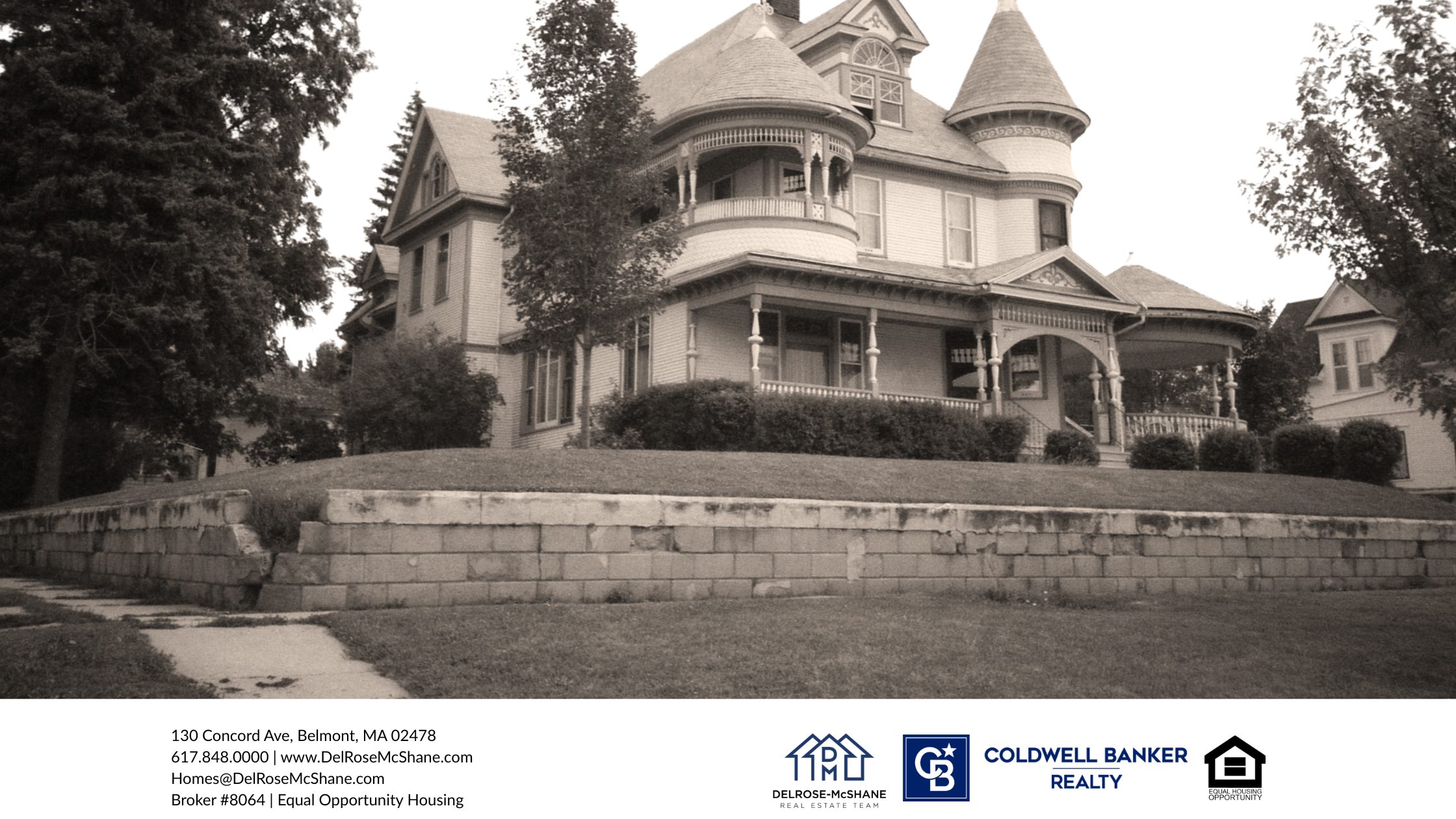
Our team has sold homes in Belmont and Watertown for three generations. A lot of them were old. When we talk about old homes in this piece, though, we aren’t talking about the 1930s center entrance Colonial. We mean Victorians, early Colonials and Saltboxes from before 1900. Houses framed when electricity didn’t exist yet.
Those homes have stood for well over 100 years. Many are solid. Many also come with deferred maintenance that a buyer needs to see clearly before making an offer.
What do we see most often in pre 1900 homes?
- Knob and tube wiring. The insurance question matters more than the wire. Many carriers won’t write a new policy on a house with live knob and tube, which can stop a loan. We’ve watched it happen on one of our own listings, and Mike wrote up the full story in Knob and Tube Wiring: The Insurance Problem Hiding in Old Massachusetts Homes.
- Sloped floors. Usually old settlement that stopped long ago.
- Field stone foundations. Strong for a century, but the mortar breaks down and lets water in.
- Dirt floor basements. Not a structural issue, but a magnet for moisture, rodents and bugs.
- Termites and powderpost beetles. Old damage is common. Active colonies turn up too.
- Wood rot. Sills, trim, porches and musty basements are the usual spots.
- Undersized framing. Beams and joists sized for 1890, not for stone counters and a soaking tub.
- Shallow closets and little storage. Closets back then held two outfits: one for daily wear and one for Sunday.
- Closed layouts. Nobody planned for a TV wall or 40 guests at Thanksgiving.
Why not just level the floor?
Buyers ask us this all the time. The problem is that the whole house has settled around that slope for a hundred years or more. Jack the framing back up and the pressure travels. Tile cracks from below. Plaster opens up. Doors that close fine today start to stick. We’d rather see a structural engineer confirm the settlement is stable and leave it alone.
Are those tiny holes in the beams a problem?
Usually not. Small round holes in old lumber typically trace back to powderpost beetles. The wood sat untreated in a lumber yard, the beetles laid eggs in it, and the eggs hatched after the wood was already built into the house. The adults chewed out and left. According to the University of Kentucky’s entomology extension, the most common type begins emerging within a year of the wood being processed, with small numbers continuing for about five years.
Fresh, light colored powder under the holes is the exception. That can point to activity, and some species occupy damp basement wood. A licensed pest professional should look at it.
What happens during the inspection?
Expect it to run longer. Inspectors spend far more time in the basement and around the utilities in these homes. Every house shows its history, and an old house has more of it. A good inspector spends real time asking why. Why was this beam doubled? Why does this repair exist? The answers tell you what the house has been through and what may come next.
Repairs work differently too. If termites damage a sill or a main carrying beam, you can’t simply pull the bad wood and drop in new. Everything above it has been resting there for a century. Mike’s best home inspector put it this way: “You’re only adding to older homes, never taking away.” The fix is to reinforce and add support. Opening things up usually reveals the next project.
What does “not to code” mean on an old house?
Buyers hear it at almost every inspection we attend. The inspector points at something and says it isn’t to code, and the room tenses up. Usually the inspector’s next words are “but nothing is.” Codes change all the time, and a home completed yesterday can fall behind the code that takes effect tomorrow.
In a pre 1900 home, almost nothing will meet modern building codes. That doesn’t make the home illegal. New work on the house generally has to meet the code in effect at the time, which matters for renovation budgets. We tell our buyers to expect a long report. A good inspector will sort out what simply comes with an older home from what the new owner really needs to address.
Why do buyers still want them?
Because of the character. Turn of the century homes were built to look good. Ornate woodwork, stained glass, molding shaped by highly skilled carpenters, and floor plans designed to pull air through the house before air conditioning. New construction rarely comes close, and buyers who love these details will often pay for them.
Do historic districts limit changes?
They can. Under Massachusetts General Laws Chapter 40C, a local historic district commission reviews exterior changes visible from a public way, and paint color can be part of that review unless the town excluded it. In Belmont, the Historic District Commission has reviewed exterior paint on a Pleasant Street home against an approved historical color palette. If you’re buying a home with historical significance, check with the town and read the bylaw first.
How does our team help?
For buyers, we build extra time into the inspection period, line up the right specialists when an inspector flags something, push for the insurance call before the purchase and sale, and check for historic district rules. If the house doesn’t work after that, there’s always another house.
For sellers, we start earlier. We gather repair records, talk through a pre listing inspection, and help you understand what’s behind the walls before a buyer’s inspector does. Known material defects have to be disclosed, and a seller who knows the house’s history can price and position it with confidence.
Thinking about an older home?
Whether you’re buying or selling, the DelRose McShane Team would rather talk about it before the inspection than during it.
Sources: Massachusetts General Laws, Chapter 40C, Section 8 (malegislature.gov). Town of Belmont Historic District Commission, Certificate of Appropriateness HDC-23-12 (belmont-ma.gov). University of Kentucky Entomology, Powderpost Beetles, Entfact 616.
This article is general information, not legal, engineering, pest control or insurance advice. Consult the appropriate licensed professional about a specific property and a Massachusetts real estate attorney about disclosure and historic district rules.
Mike DelRose Jr. is a third-generation REALTOR® and co-leader of the DelRose McShane Team at Coldwell Banker Realty, 130 Concord Ave, Belmont, MA 02478. Reach him at 617.515.7715 or MikeJr@DelRoseMcShane.com. DelRoseMcShane.com | Broker #8064 | Equal Housing Opportunity.
